Thailand – Smart Travel Guide 2025
Why Thailand
Thailand is the classic Southeast Asia destination: easy, friendly, great food and huge variety – from Bangkok’s chaos to Chiang Mai’s temples and Andaman sea islands.
Average Daily Costs
Coffee: €1.5–3
Street food (pad thai, curry, soup): €1.5–3
Restaurant meal: €4–10
Thai massage (1 hour): €6–12
Taxi / Grab in Bangkok: usually €2–6 for short rides
Long-distance overnight bus: €15–25, domestic flights often similar or cheaper if booked early.
Getting Around
Bangkok – BTS Skytrain, MRT, river boats, taxis and Grab.
North – trains / buses to Chiang Mai, Chiang Rai; scooters for local exploring.
Islands – boats + local songthaews (pick-up taxis) and scooters.
Trains are a nice experience on Bangkok–Chiang Mai or Bangkok–Ayutthaya routes.
Money & eSIM
Currency: Thai Baht (THB).
ATMs charge a fixed fee per withdrawal, so take out larger amounts less often.
eSIM / SIM: AIS, TrueMove, DTAC have tourist packages sold at airports and 7-Eleven.
📱 Best eSIM for Travelers
Staying connected abroad is easier (and cheaper) with an eSIM.
You can activate it instantly — no physical SIM card, no store visits, and no passport checks.
Why travelers prefer eSIM:
Works immediately after purchase
Keeps your Irish/UK SIM active for calls & banking
No roaming fees
Fast 4G/5G in most destinations
Perfect for short trips or long stays
👉 For the best worldwide eSIM deals, click here.
💡 Which eSIM to choose?
Most travelers pick plans based on:
Data allowance (3GB, 5GB, 10GB, unlimited)
Trip length (7–30 days)
Region (Asia-only, Europe-only, Global eSIM)
Speed (4G vs 5G)
Global eSIMs are great if you visit several countries in one trip — no need to switch SIM cards.
🛠 How to activate your eSIM
Takes 1 minute:
Buy the eSIM online
Scan the QR code
Turn on “Data Roaming”
Start using data instantly
No contracts. No hidden charges.
🔐 Stay safe while traveling
Many hotels, cafés and airports have slow or risky Wi-Fi.
An eSIM gives you a secure connection everywhere — useful for:
Google Maps
WhatsApp
Banking apps
Flight check-ins
Booking transport
💬 My recommendation
If you travel a lot (like you do), choose a regional or global eSIM — they work in dozens of countries and save time.
Best Time to Visit
Thailand’s weather depends on region, but as a simple rule:
Cooler & drier months: November–February – good almost everywhere.
Hottest months: March–May.
Rainy season: roughly June–October, but showers often come in short bursts.
For first-timers, November–February is easiest.
Top Places & Experiences in Thailand
Bangkok – Grand Palace, Wat Pho, Chinatown & Rooftops
Explore Thailand’s vibrant capital: visit the Grand Palace, see the Reclining Buddha at Wat Pho, walk through Chinatown, and enjoy rooftop views over the city.
Click here for tours and tickets.
Chiang Mai & Chiang Rai – Temples, Nature & Ethical Sanctuaries
Discover peaceful mountain cities filled with ancient temples, night markets, and breathtaking viewpoints. Choose ethical elephant sanctuaries to support responsible tourism.
Click here to book top-rated experiences.
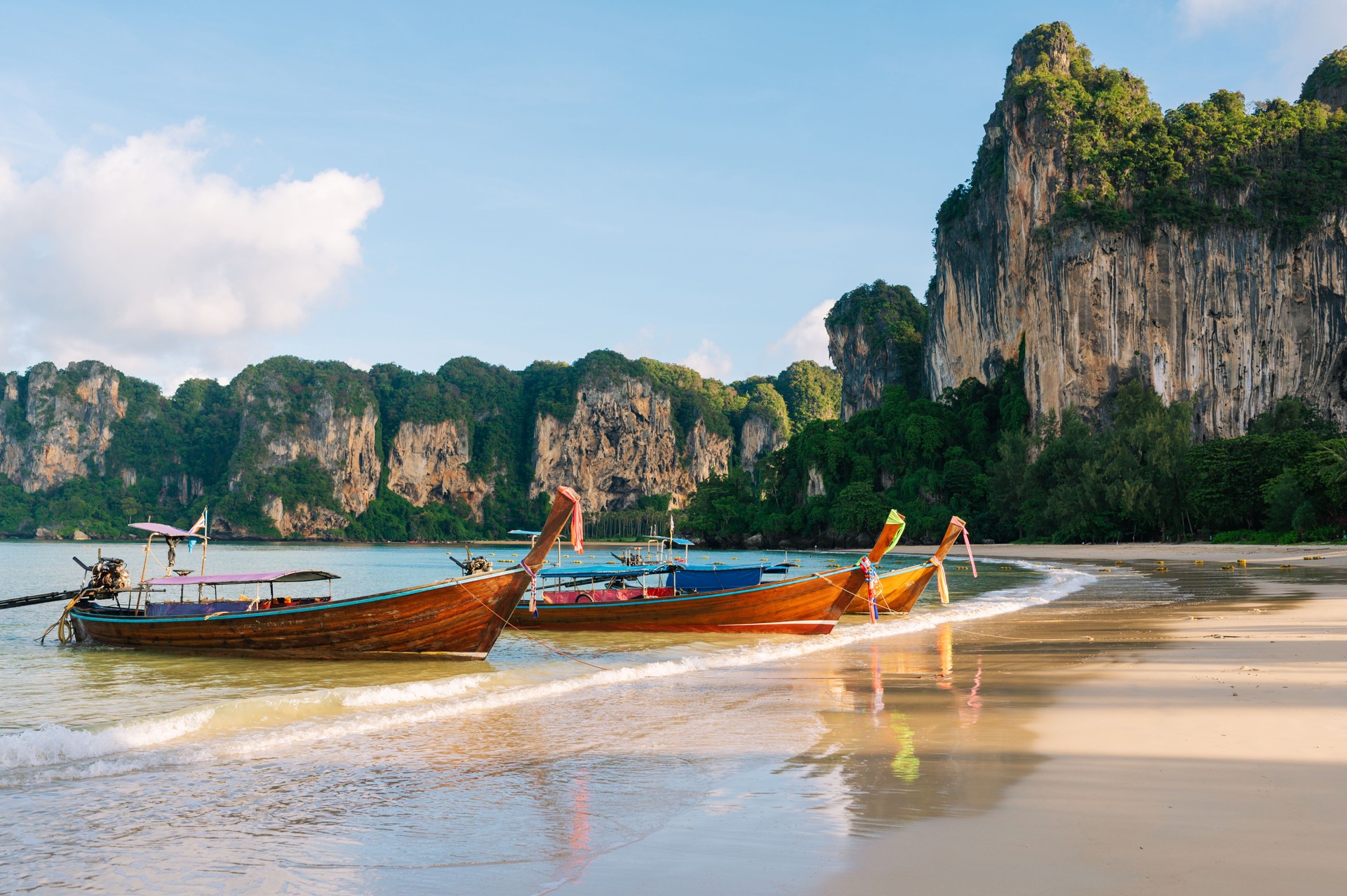
Andaman Coast Islands – Phuket, Krabi, Koh Lanta, Koh Lipe, Phi Phi
Crystal-clear water, white sand beaches, and dramatic limestone cliffs. Perfect for island hopping, snorkeling, and relaxing in the sun.
Click here for island tours and transfers.
Gulf of Thailand Islands – Koh Samui, Koh Phangan, Koh Tao
A calm and tropical coastline with luxury resorts, yoga retreats, diving spots, and lively beach towns.
Click here to explore available trips and activities.
Safety & What to Avoid
Be careful with tuk-tuk drivers offering “very special tour” – often it’s a loop of jewellery and tailor shops.
Don’t ride motorbikes without proper licence and helmet – accidents are common.
Drink only sealed bottled water; avoid ice where you’re unsure about hygiene.
Be respectful in temples – cover shoulders and knees, remove shoes.